Over the past 8 weeks I’ve been learning to code. This isn’t a sentence I ever thought I’d write.
I’m a Theologian by training, specialising in female martyrdom in early Christianity. For me, studying used to mean sitting in the library of the historic Durham Cathedral, pawing over dusty tomes, making sense of words penned centuries ago. My mind was fixed on rediscovering the past and unearthing a history that had been long forgotten. The concept of coding was completely beyond my worldview.
To my surprise, my career led me down an unexpected path from Theology to Technology.
Over the past 5 years or so, I’ve been managing digital projects and partnerships, working alongside computer scientists, software developers, and data engineers. Currently I work for the not-for-profit organisation, Dynamo North East, managing the new Digital Talent Engine project. In these roles I’ve found myself saying, somewhat apologetically, “I work in tech, but I’m not techy”. But what if I could do something about this…?
Taking the plunge
My past experiences convinced me that I wasn’t naturally “techy”:
Quite a few years ago one of my colleagues joked that I wasn’t very good with computers… that comment stuck with me and became an “internal voice” telling me that I wasn’t cut out to code. (Extract from Week 1: “Hello World!”)
But recently I’ve had the pleasure of running a #techmumsClub with the social enterprise #techmums, and working with the incredible TechUP Team at Durham University. I met so many inspirational people — mainly women, many of whom are mothers — who work in tech, or who have learnt to code and are pivoting into tech careers. These personal stories of courage, resilience, and persistence gave me the push that I needed:
Their journeys into tech are stories of bravery, resilience, and dedication. Most are women, have caring responsibilities, and are juggling part-time study with paid work. Add covid to the mix, along with the unexpected challenges that life throws up, and it becomes clear that they are nothing less than superheroes! Hearing their stories and watching their journeys is incredible, and has encouraged me to follow in their footsteps. (Extract from Week 1: “Hello World!”)
Choosing the right course
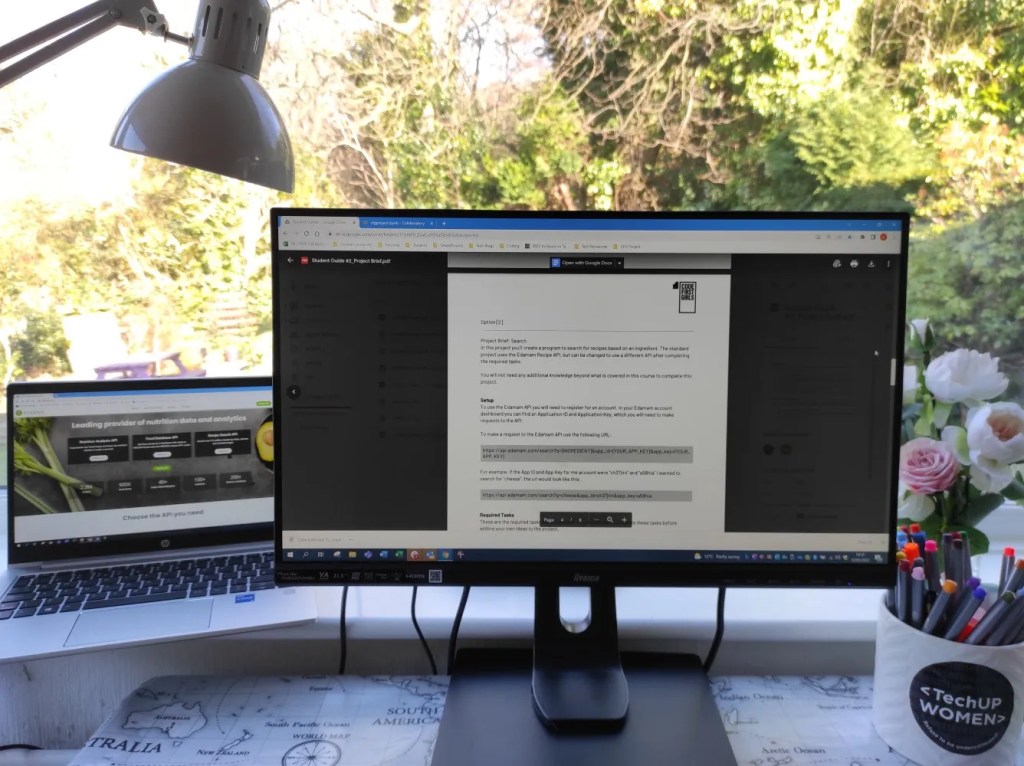
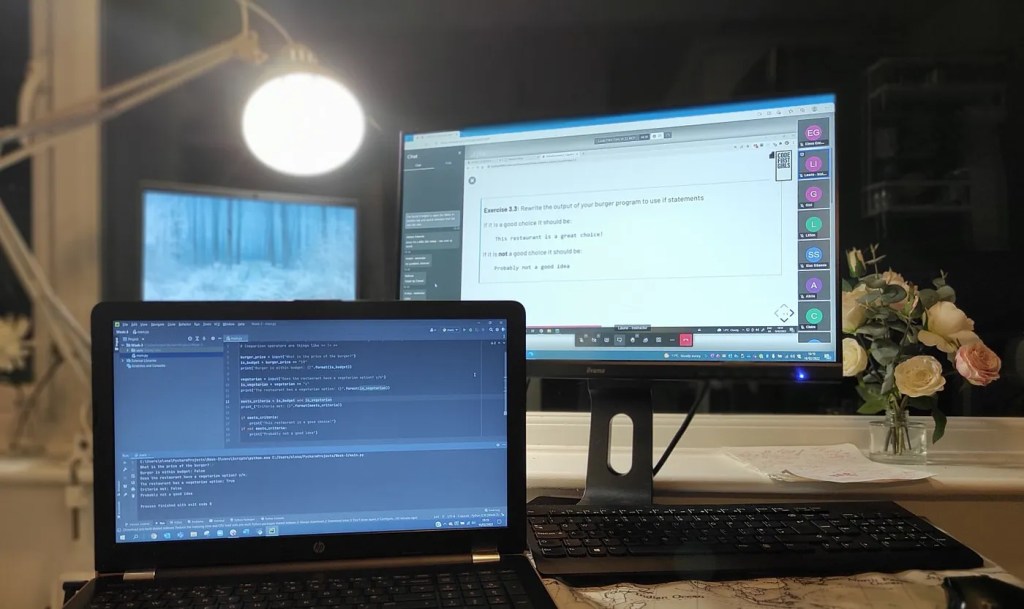
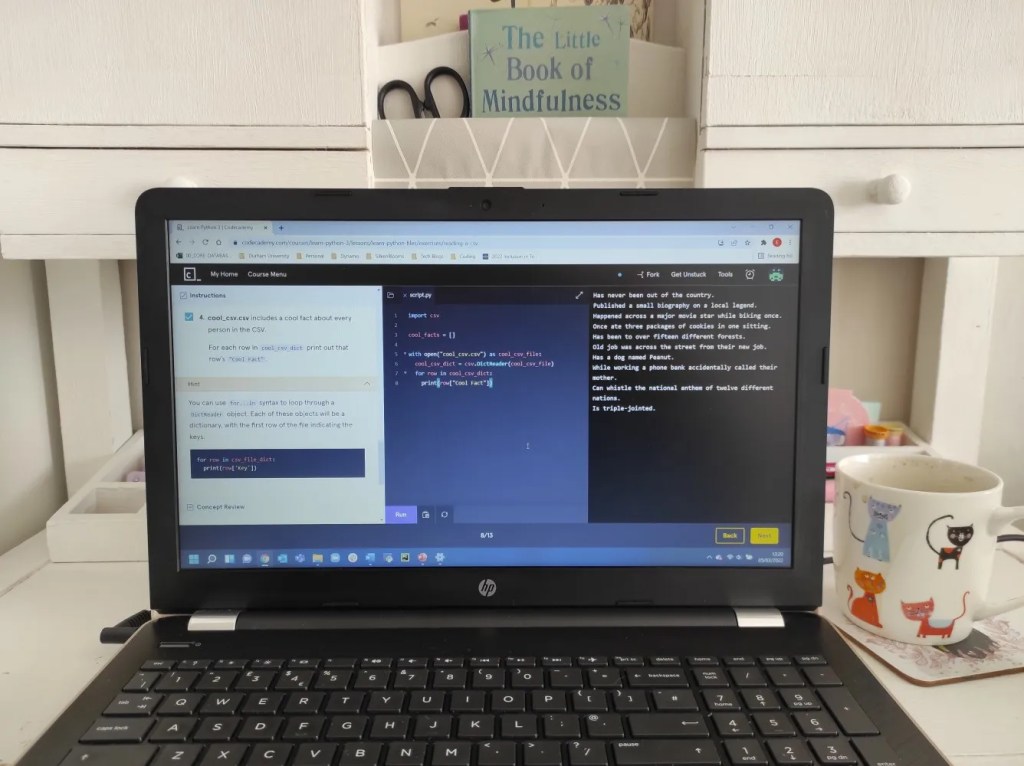
Once I decided that I would learn to code, I explored options for free or low-cost coding courses. I signed up to a live online course with Code First Girls to learn the fundamentals of Python. Alongside this, I registered on an online Codecademy course to extend my knowledge of Python in my own time.
Upon reflection, I feel that the combination of both courses has been ideal for me. Although I do wish that the Code First Girls course was longer, covering topics a little slower, with more time to develop the group project, and with an extension option to learn front end development. That said, the course was utterly fantastic, and the live sessions and community elements were invaluable.
I’ve found that delivery methods and styles vary greatly even between these two courses. If you want to learn to code, it’s so important to find a course that suits you:
Try to find a course that suits you and your learning style. Consider course intensity, duration, pace, delivery methods, and learning community. There are lots of free resources online; explore them, and consider creating a mix-and-match combination that works for you. (Extract from Week 4: One Month of Coding)
Documenting my journey
Over the past 8 weeks I’ve been documenting my coding journey in weekly LinkedIn articles. In these articles I give honest insights into the experience of learning to code; the highs and the lows, the challenges and the successes:
I hope that sharing my own experience might encourage other people (and especially women) to explore coding or other tech topics.
So, how was it?
This is just the beginning, and I am only scratching the surface, but the experience of learning to code has been amazing!
It hasn’t been easy balancing study with work and family life but I’m surprised by how much I’m enjoying the journey. I expected to find coding interesting but I hadn’t expected to love it! (Extract from Week 4: One Month of Coding)
I am nowhere near considering myself to be “a coder” but I have learnt more than I could have hoped:
In a very short time, I have covered lots of coding principles and concepts: syntax; errors; strings; user input; control flow; lists; loops; functions; dictionaries; files. Until recently, I knew nothing about these topics. (Extract from Week 6: Learning to Code: Practice and Projects)
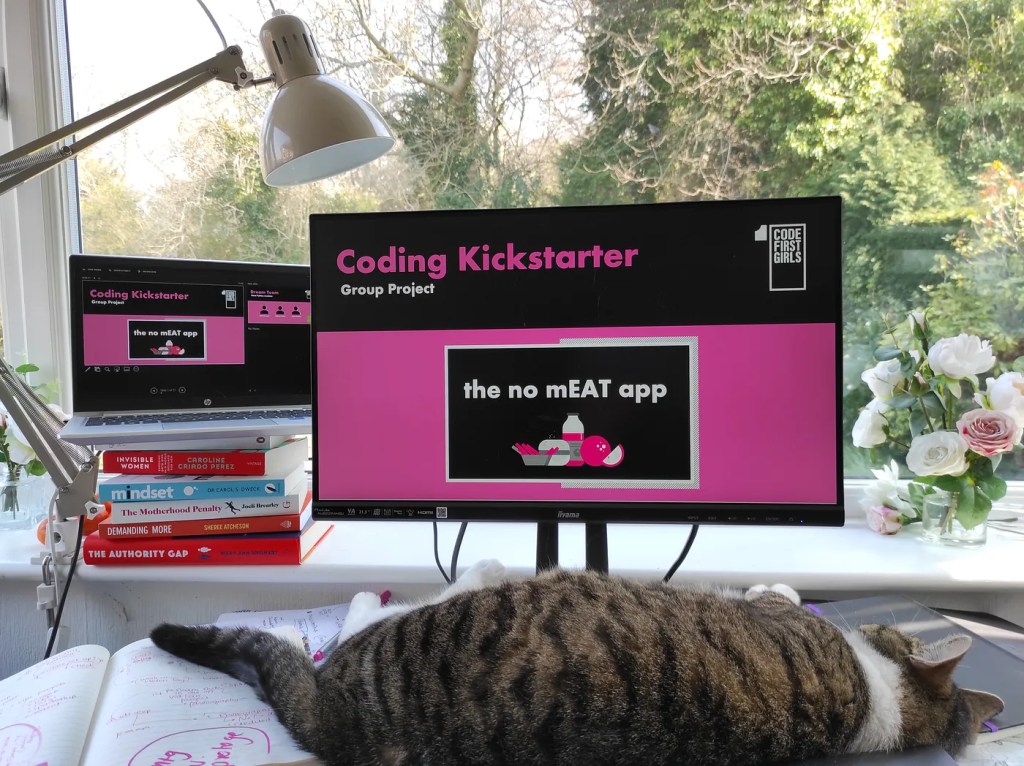
I’ve also had a fantastic experience of working on my first group coding project, alongside two brilliant women on the Code First Girls course, and I must admit that I’m amazed at what us three beginners have achieved!
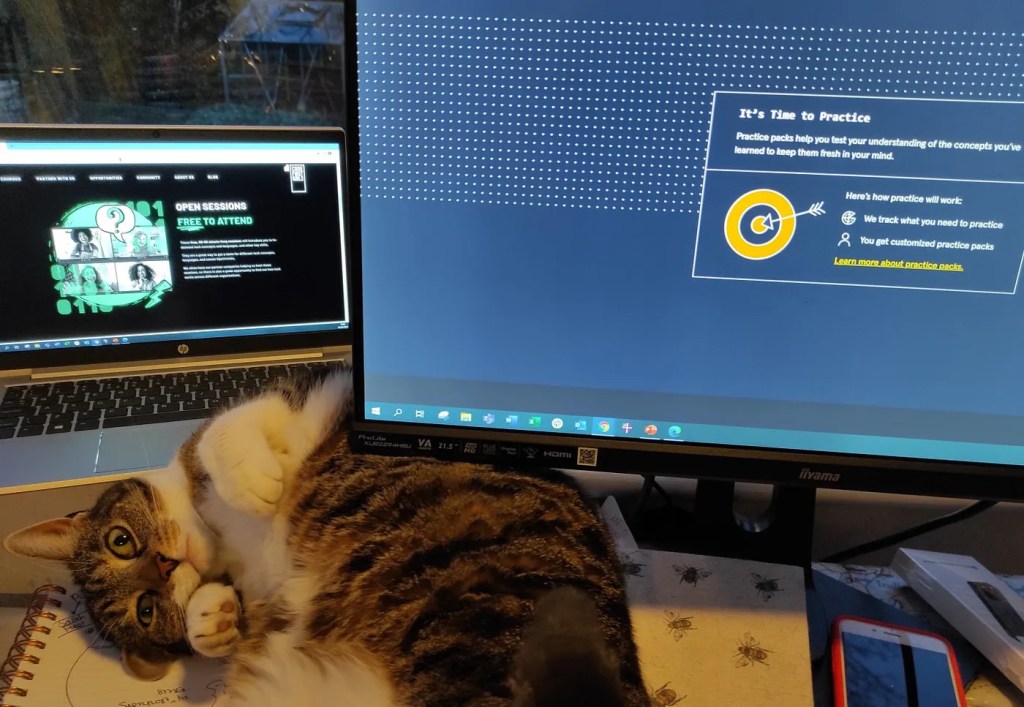
That said, it certainly hasn’t been without challenges. If you’ve read any of my articles, you’ll know that the biggest challenge has been studying while looking after my two young children (one of whom is still breastfeeding and doesn’t sleep well). My one year old daughter has joined me for most of the Code First Girls live sessions, and doesn’t seem to like me studying in the evenings!
I’m the kind of person who gets completely absorbed in a project. If I have work to do, I work hard until I get it done. If I have an assignment to complete, I give it everything I’ve got. So having constant interruptions is difficult, especially with coding, as it’s hard to recover from breaks in concentration. But then I had a bit of a revelation:
I was rocking my baby girl to sleep for the umpteenth time, thinking about how I wanted to get back to my laptop… For a moment, it felt impossible… Then it occurred to me: what if I just need to think about this differently? What if I stop seeing motherhood as an obstacle, and start thinking of it as an opportunity to approach learning in my own personal way? (Extract from Week 3: Coding Like a Mother)
That week I tried to change my mindset and focus on having fun:
Children love to play. They are curious. They enjoy exploring, discovering, building, and knocking things down. They become absorbed in the moment, often without any particular goal except play itself. If I want to enjoy learning to code, I could tap into that playfulness. I could reconnect with my inner child. (Extract from Week 3: Coding Like a Mother)
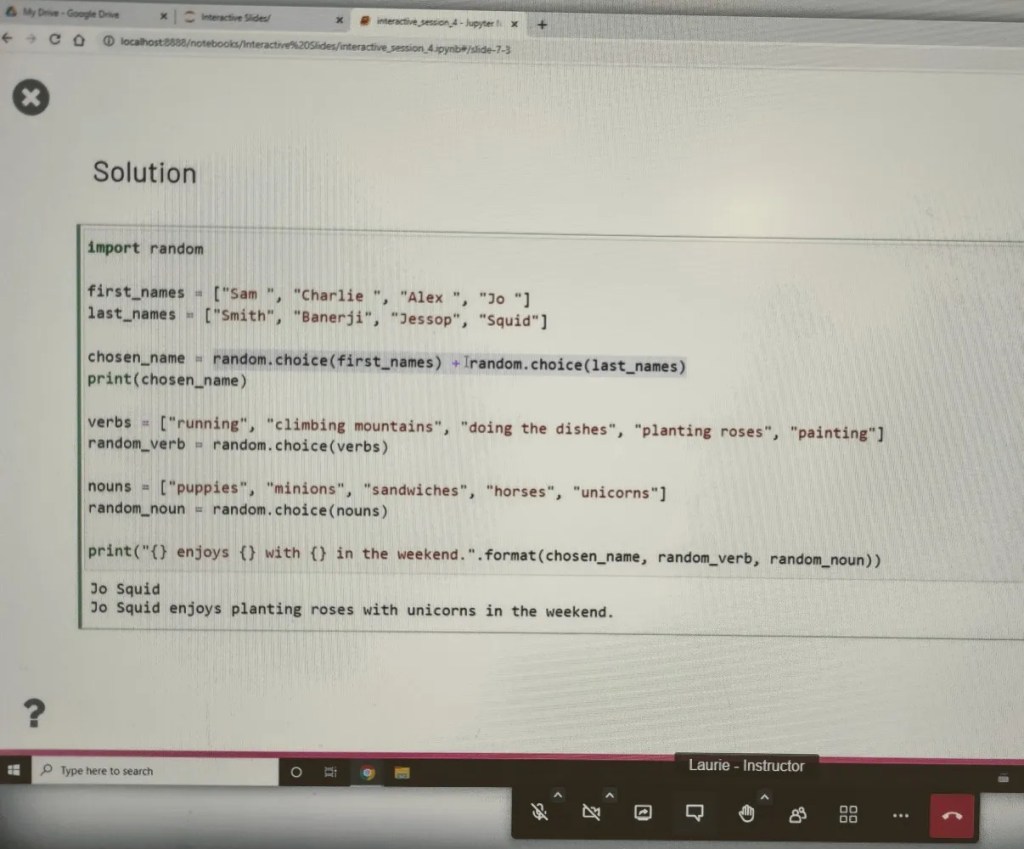
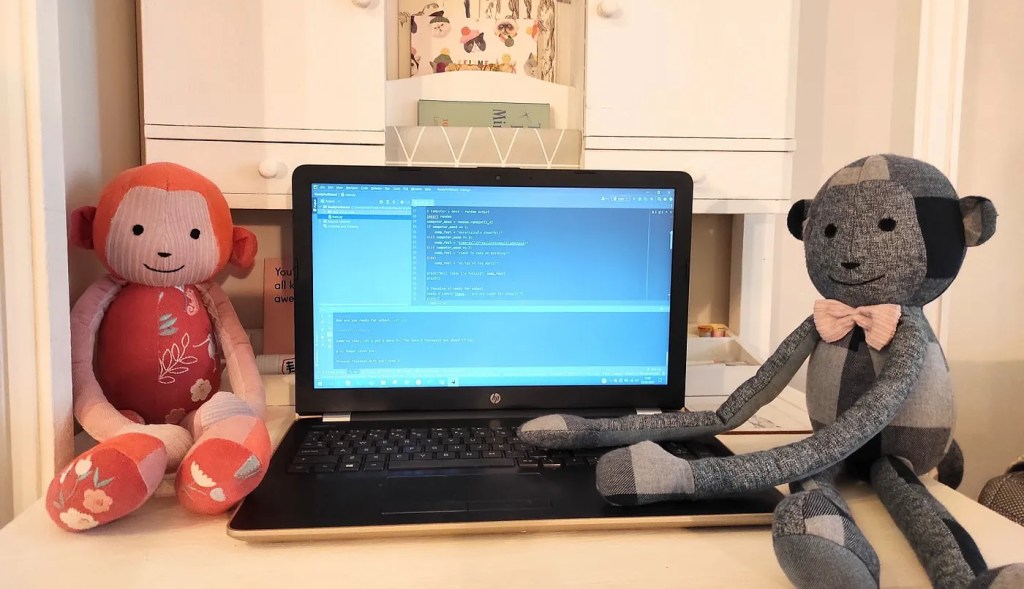
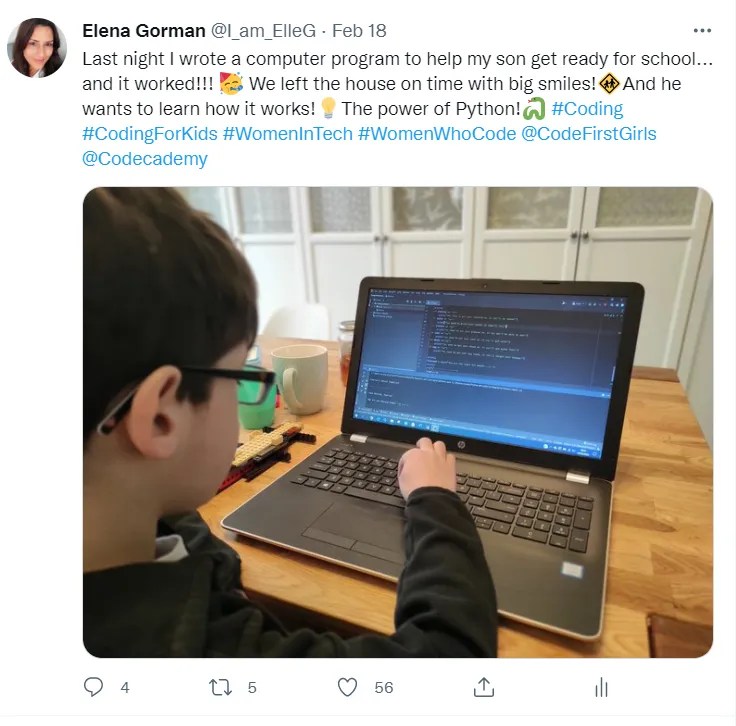
Focusing on playfulness was exactly what I needed. From that point onwards I had a lot more fun learning to code. I coded silly jokes, made a text adventure game for my son, and wrote a program to gamify the process of getting out of the house for school in the morning!
I also worked on lowering my expectations and being more realistic about what I could achieve in my present circumstances as a mother of a young family.
I would love to make steady progress by setting aside regular blocks of time to study every day. But, life! Working and raising a young family means that, for now at least, progress will be irregular and unpredictable. As long as I keep going, I will head in the right direction. (Extract from Week 5: All Progress is Good Progress)
Balancing study with motherhood was the biggest challenge by far. But I also experienced less practical challenges that were mental barriers along the way.
One of the challenges was finding learning difficult. Starting something new is difficult. It’s easy to fall at the first hurdle, lose confidence, and give up. But we need to be aware of our negative inner voice:
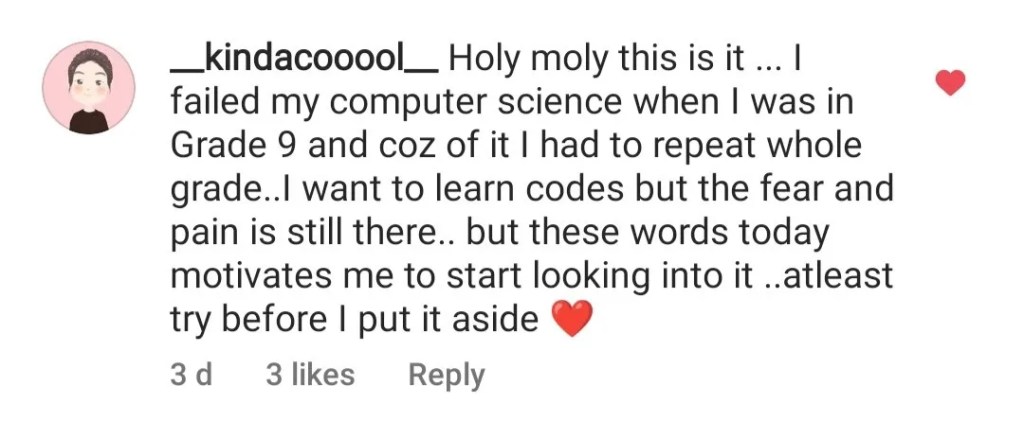
Don’t let your past educational experiences shape your current ambitions to learn. Just because you found it difficult to do something similar in the past, doesn’t mean that you can’t make progress with it now. (Extract from Week 2: The Joy of Learning to Code)
Just because a course is described as “beginner”, that does not necessarily mean that it’s easy. The word “beginner” suggests that everyone is starting at the same point. But each of us approaches new learning with our own unique set of educational and life experiences. We don’t all start at the same point, and we don’t all travel along the exact same path. What one “beginner” finds easy, another finds challenging:
Finding something difficult is not a sign of inadequacy or failure. Learning to code is difficult. Beginner courses can be difficult. Certain topics are more difficult than others. Persistence, patience, and self-belief will triumph! (Extract from Week 4: One Month of Coding)
Another challenge was “learning to learn” again:
We need to be patient with ourselves if we don’t understand concepts immediately, and we need to have humility and bravery to ask questions… Learning to learn again involves emotional work and identity work. Try to notice and celebrate your successes given your own particular context. (Extracts from Week 4: One Month of Coding)
One thing that has kept me going throughout the past 8 weeks is a supportive community. Most importantly, the support of the Code First Girls instructors and cohort, and the support of my LinkedIn network:
Connections with real people are so important. There is such power in somebody saying “Well done!”, “You’ve got this!”, “Have faith in yourself!”, or “I’m struggling too!”… Exchanging a few kind words can have a huge impact on your confidence, motivation and progress. (Extracts from Week 4: One Month of Coding)
Are you learning to code?
My hope is that my reflections will help people — and especially women and mums — to consider learning to code or explore digital and tech opportunities and careers. I’d love to hear your thoughts on whether my articles have been useful, or if there is anything I can help with!
About the Author
Elena Gorman is a UX Designer specialising in User Research. Before changing careers into UX in 2022, she worked as a Project Manager, including for tech-related initiatives, such as the TechUP Programme at Durham University, for The Alan Turing Institute at Newcastle University, and the Creative Fuse North East project at Northumbria University.


 ELENA GORMAN, PHD
Leave a comment