Designing a new online service to make Britain’s roads safer
Employer: Driver & Vehicles Standards Agency (DVSA), UK Government
OUTCOME
Clickable prototypes for a new online service, comprised of a suite of 6 online forms, to provide a more accessible, safe, and secure route for members of the public to report fraud and related concerns to the government.
CONTEXT
The Driver and Vehicles Standards Agency (DVSA) investigates suspected cases of fraud and other concerns relating to drivers and vehicles.
Currently, members of the public can only report concerns via telephone (during office hours), email, or post.
Working as a Senior User Researcher, alongside a Senior Service Designer, we designed a new digital service for members of the public to more easily, safely, securely, and anonymously report concerns to the DVSA.
The new service would also help people to report specific information that the DVSA requires to investigate concerns, so improving efficiency, and increasing the likelihood of a successful investigation, and, where relevant, prosecution.

TEAM
As a Senior User Researcher, I worked closely with a Senior Service Designer. We involved internal stakeholders as subject matter specialists, including colleagues from the Intelligence Unit and Market Surveillance Unit. We also worked with the Content Design Team for content crits and approval for gov.uk website content.
CONSTRAINTS
I was brought onto the project after the first round of design work had been completed. This wasn’t ideal, as User Research had not been carried out, so we decided to take an iterative approach of carrying out user research and updating the designs in light of insights from rounds of research.
While there was a firm deadline for the new service to go live to the public, there was no project plan in place. My first action was to put in place a project plan to identify key stages of work and approvals, and to identify risks, so that I could scale the research up or down, depending on the time available. I worked quickly to learn about the history of the project, review the initial designs, and learn about the broader environment for public reporting of concerns.
There were a number of significant constraints that impacted my ability to conduct user research:
- As I was working for the government, I was advised that the timing of the party political conferences meant that I would not be able to conduct research with members of the public in the timeframe available to us;
- The short deadline for designing the new service was immovable, and required us to have designs finalised for the external developers within a few weeks, leaving very little time for iterative research and design;
- Lack of access to primary data, on account of the sensitivity and confidentiality of public reports, made it more difficult to gain an in-depth understanding of the nature of the reports, the current processes, and the experiences of people who report concerns;
- Significant constraints relating to a specific strategic priority within the DVSA, which limited certain activity with the public. (I am unable to provide detail on this particular constraint)
Conducting research within these constraints was the most challenging part of the project. Aside from the fact that user research is essential for designing good services, it is also required for the GDS service assessment before the release of a new service.
The constraints made it difficult to carry out effective research with members of the public. But, despite these constraints, I found ways of conducting rapid research to improve the design of the new service, within tight timeframes.
MY DESIGN PROCESS
Rapid review and immersion
Quickly understanding the current service and backend processes. Reviewing initial designs for the online forms, and understanding the rationale for the design decisions. Meeting subject matter experts to understand their roles and requirements.
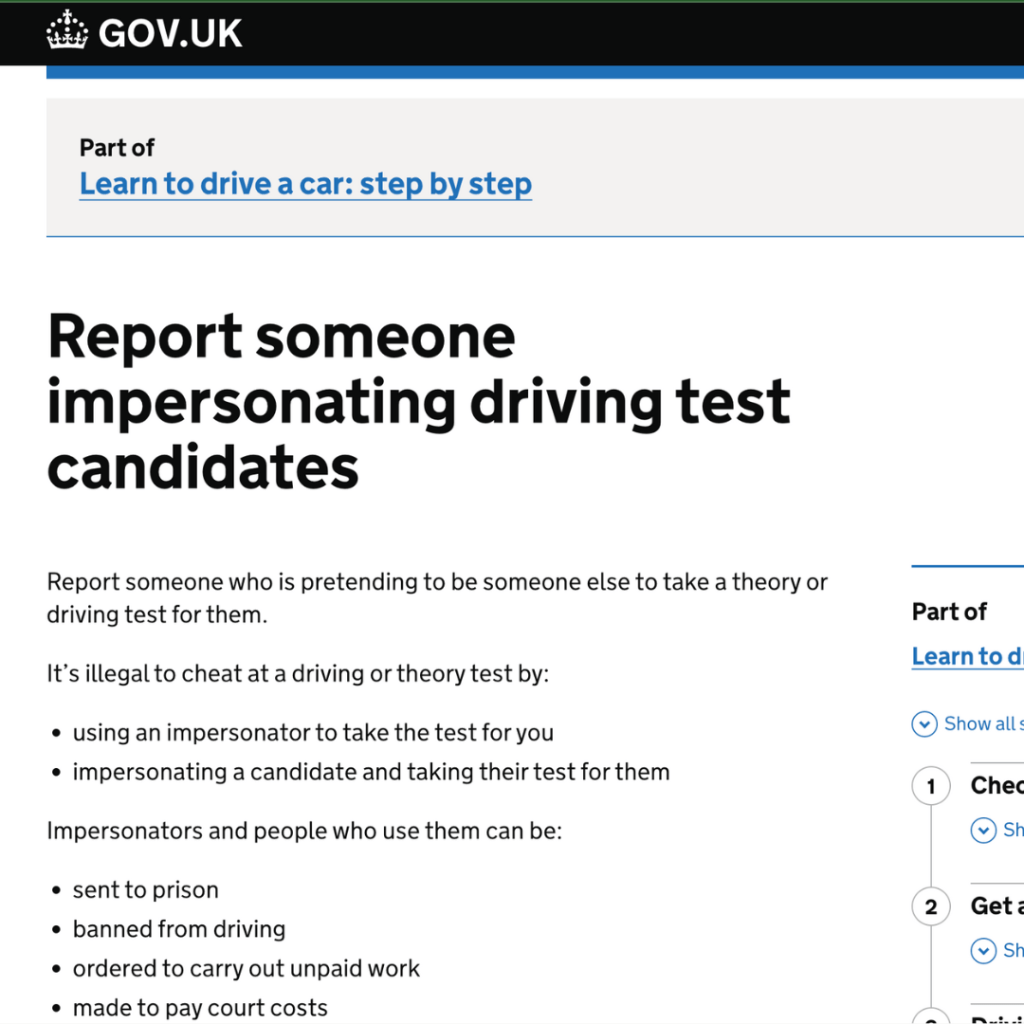
Cognitive walkthroughs
Conducting an in-depth cognitive walkthrough of the designs, identifying areas to improve, and ideating solutions. Organising cognitive walkthroughs with several colleagues, and iterating on designs. (Images intentionally blurred)

Remote usability testing
Running several remote usability testing sessions with clickable prototypes, using specific scenarios, to evaluate the form content and design, and identify areas for improvement.

Site visit
Visiting a customer service centre to learn more about the current processes and backend systems for the public to report concerns.
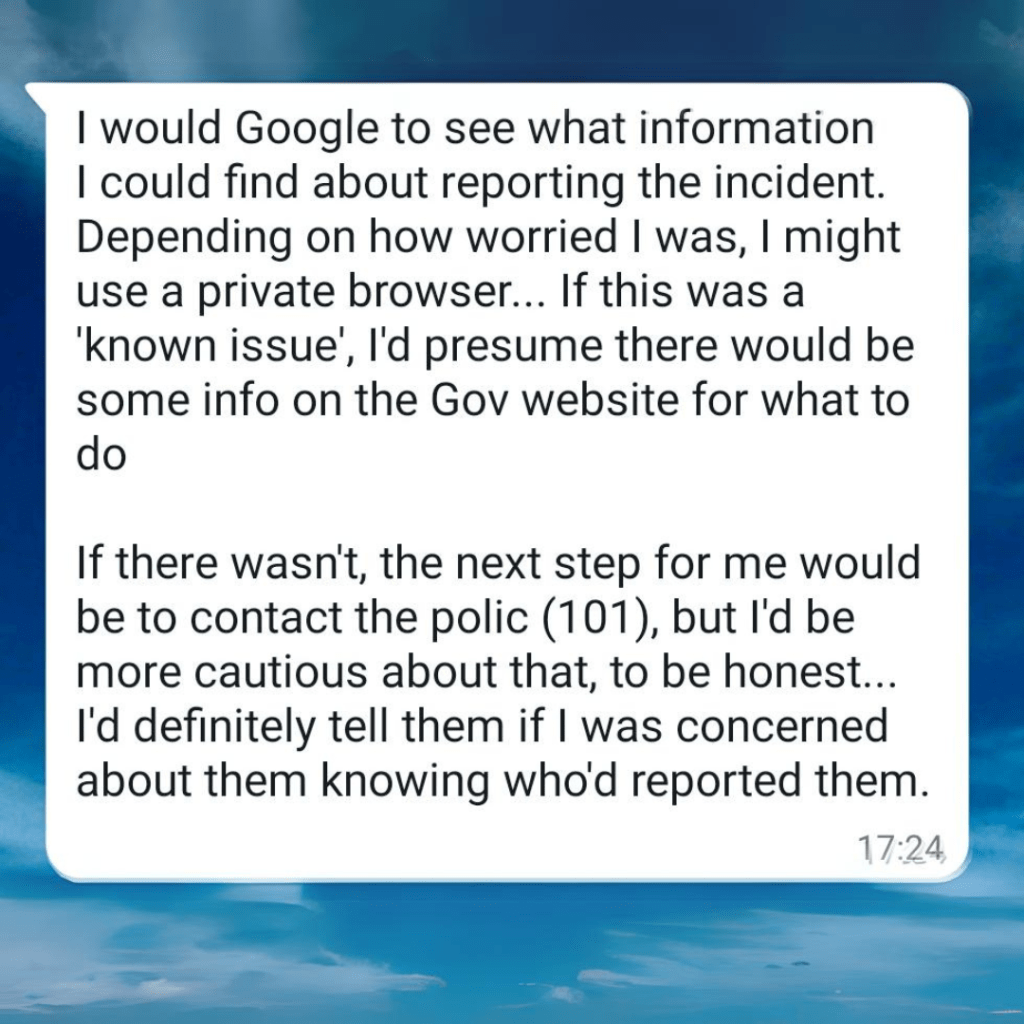
Rapid responses
“Quick and dirty” research via WhatsApp, using specific scenarios, to better understand how the forms might be surfaced.
Iterative design, review, and testing
Holding regular meetings and design walkthroughs with internal stakeholders, Subject Matter Experts, the Content Design Team, and the external developers. (Image intentionally blurred)

OUTCOMES
Despite the constraints, we quickly and successfully designed a suite of 6 online forms, which cover a vast range of scenarios, and are easy to navigate and complete. We also defined the requirements for the start page for each form (to be published on the gov.uk website), and metrics for continuous improvement.
The new online service will provide a more accessible and secure route for members of the public to report concerns. It will help them to include important information so that the DVSA can investigate their concerns more efficiently and effectively. And, ultimately, it will help to make Britain’s roads safer.
Resulting from this work, I proposed a further project to conduct a longer-term, in-depth, end-to-end review of the service, incorporating user research from the start, to identify further opportunities for improvement.
 ELENA GORMAN, PHD