Identifying opportunities to improve a nation-wide archives platform
Charity: Jisc
OUTCOME
Through rapid pre-discovery, I identified and documented business goals, user needs, pain points, and opportunities, to lay solid foundations for a swift transition into a well-planned phase of direct research with users.

CONTEXT
Jisc is a not-for-profit organisation that uses technology to empower the higher education, further education, and skills sectors.
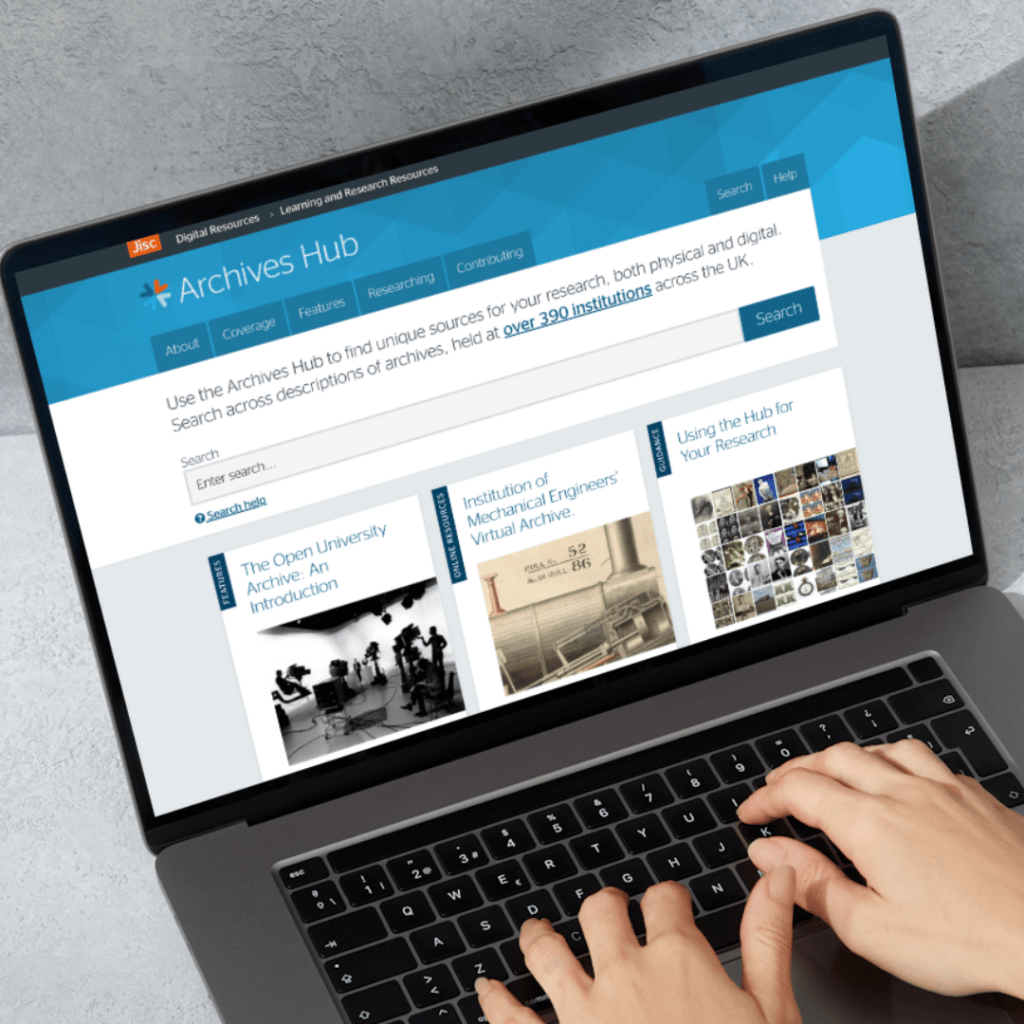
One of Jisc’s many products and services is Archives Hub: a large online directory of archives and collections, designed to connect researchers from all over the world with archival resources in the UK.
BRIEF
As a UX Designer focusing on Jisc’s research management products and services, I was asked to work with the Archives Hub team to conduct user research. The objective was to lay the foundations for better understanding users, evaluating the current user experience, and identifying opportunities for improving Archives Hub.
This case study relates to the first phase of the project: rapid research for pre-discovery.
This desk-based foundational work helped to:
- identify insights to shape plan for discovery;
- consolidate existing knowledge, assumptions, and data;
- inform Jisc’s Service Review of the Archives Hub.
MY DESIGN PROCESS
Immersion in the website
Exploring the Archives Hub website, focusing particularly on the content pages. Creating notes and mapping the content to better understand how the website is structured.
Cognitive walkthrough
Carrying out a cognitive walkthrough, guided by a fictional scenario for a researcher. Documenting findings in a user journey map, noting actions, thoughts, feelings, pain points, and opportunities.

Process flow
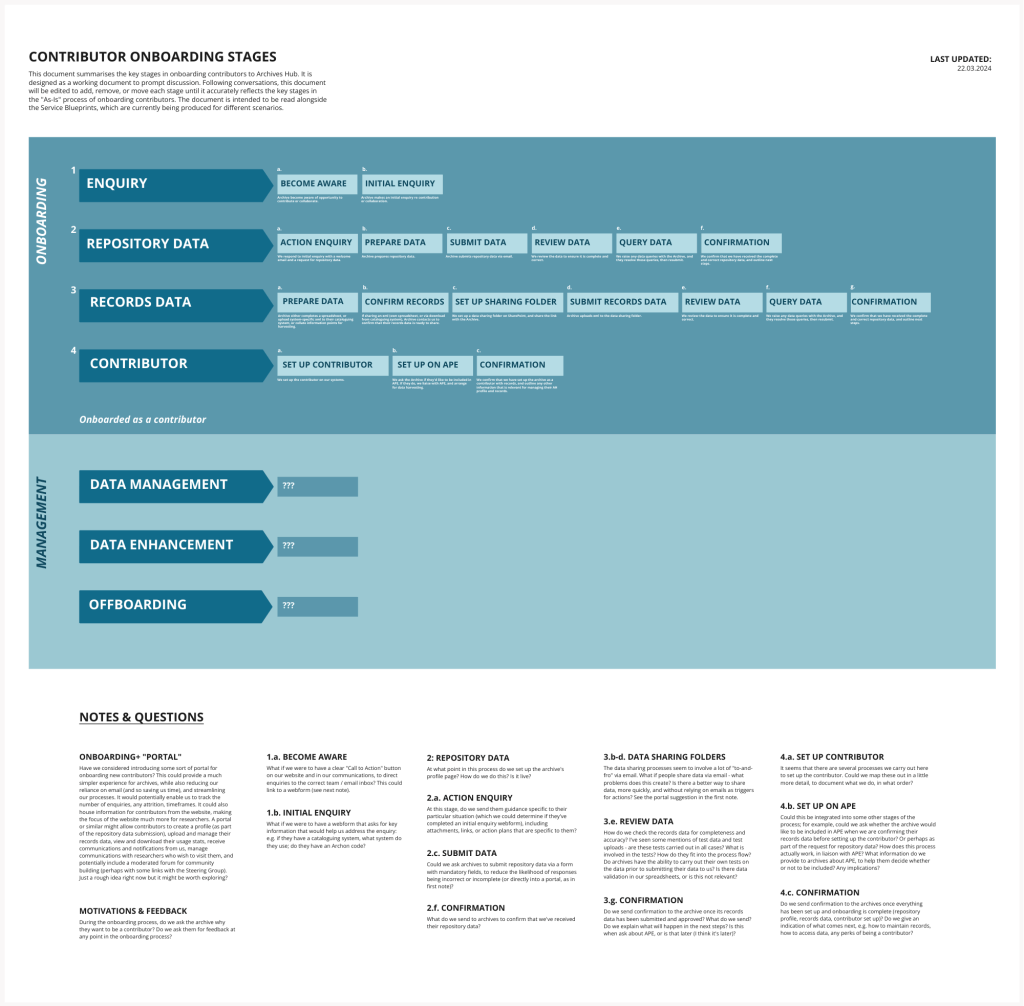
Producing a process flow for the onboarding process for archive contributors, based on the information and advice published on the website, as a starting-point for discussion, and to clarify unknown details of the process.

Process overview
Identifying and visualising the key stages in the contributor onboarding process, as gleaned from the process flow, to confirm high-level understanding.
Service blueprint
Creating a service blueprint for the contributor onboarding process, focusing on a specific user scenario, as a starting-point for conversation, and to clarify understanding.

Desk-based user research
Early-stage, desk-based research into different user groups, as a foundation to inform proto-personas, and user research in phase two. Reviewing videos, blog posts, job descriptions, job adverts, and academic papers.

Data analytics
Inferring user insights from data in Matomo by mapping user journeys through the search pages of the Archives Hub. While the insights gleaned were inferences, this was useful for thinking about future user testing.

Proto-personas
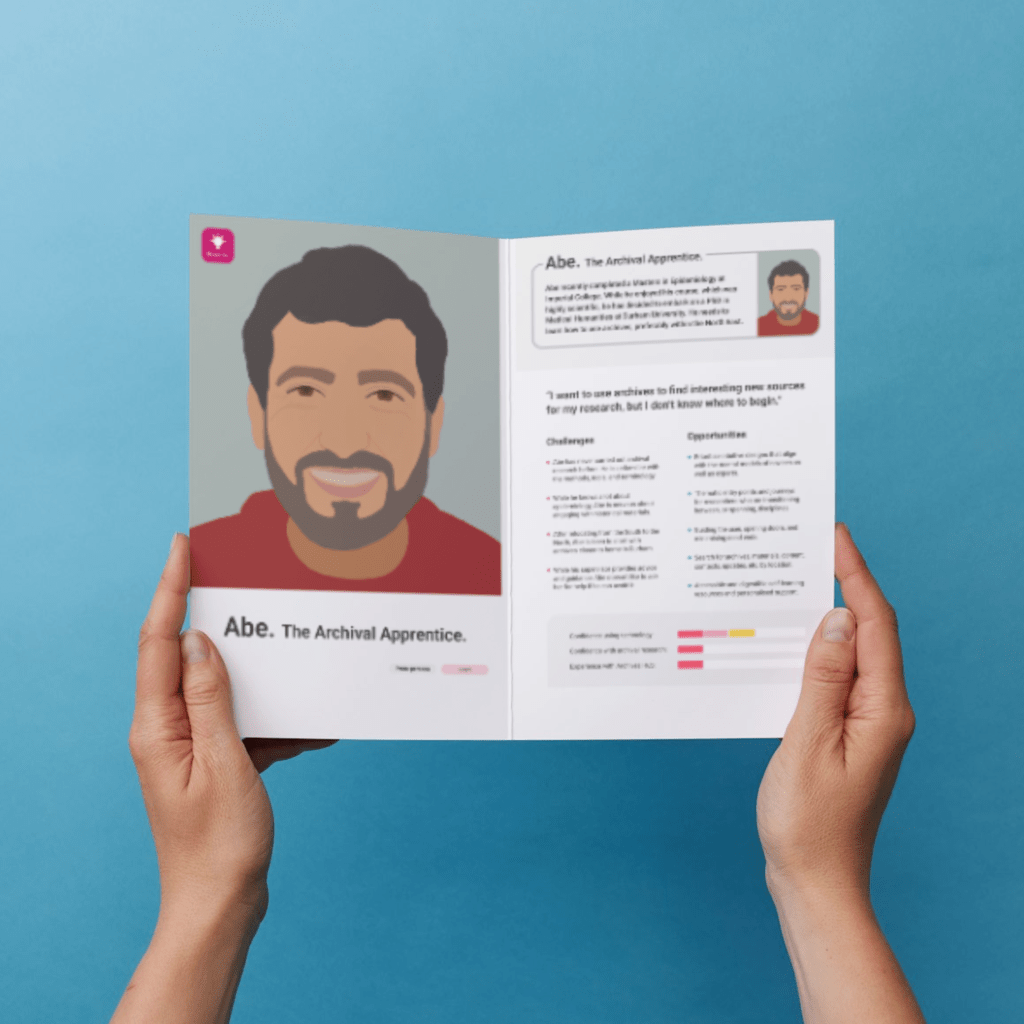
Iteratively creating a set of seven proto-personas for the main user groups, based on existing knowledge and assumptions, as a starting point to guide, and evolve with, user research.

Collating questions
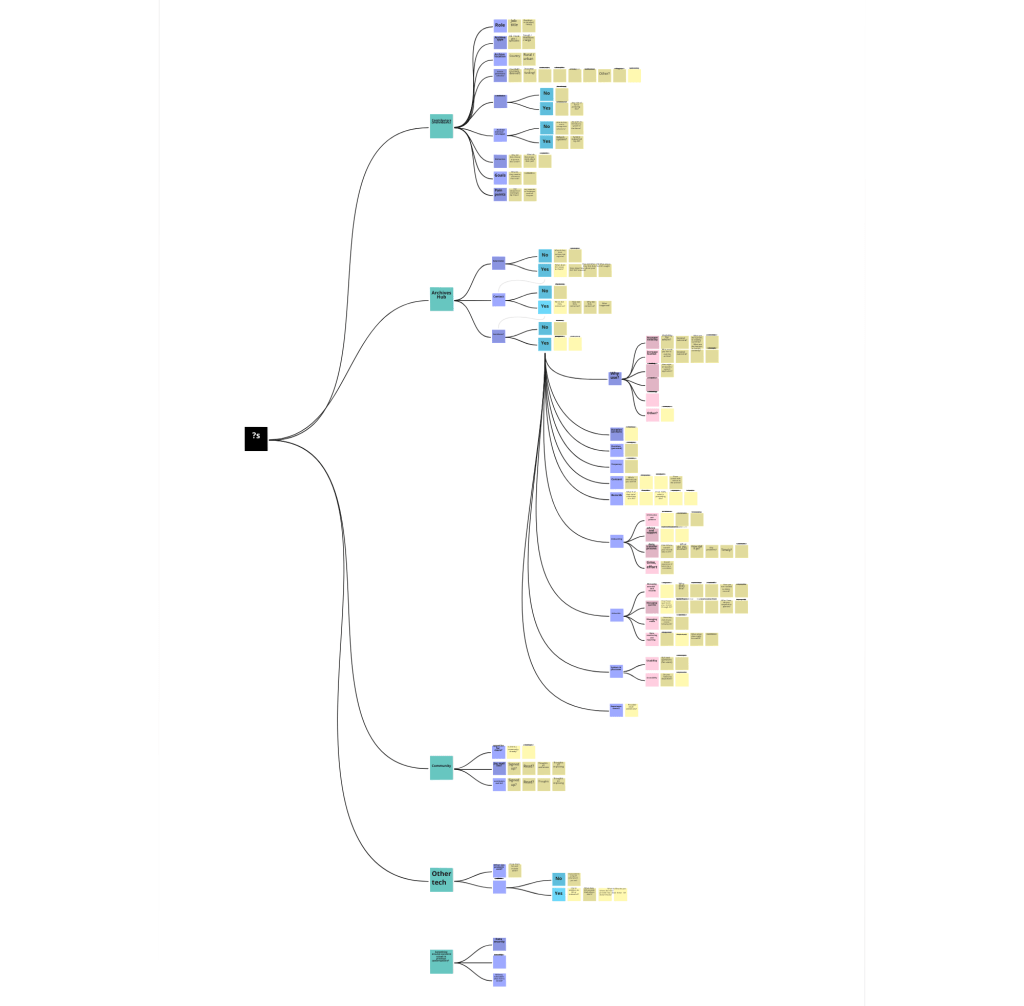
Documenting questions and areas for exploration during phase two: user research for discovery.
Pre-discovery playback
Producing and presenting a short report on the pre-discovery findings to the Product Manager for the Archives Hub. I had also documented key information in Miro and Confluence.

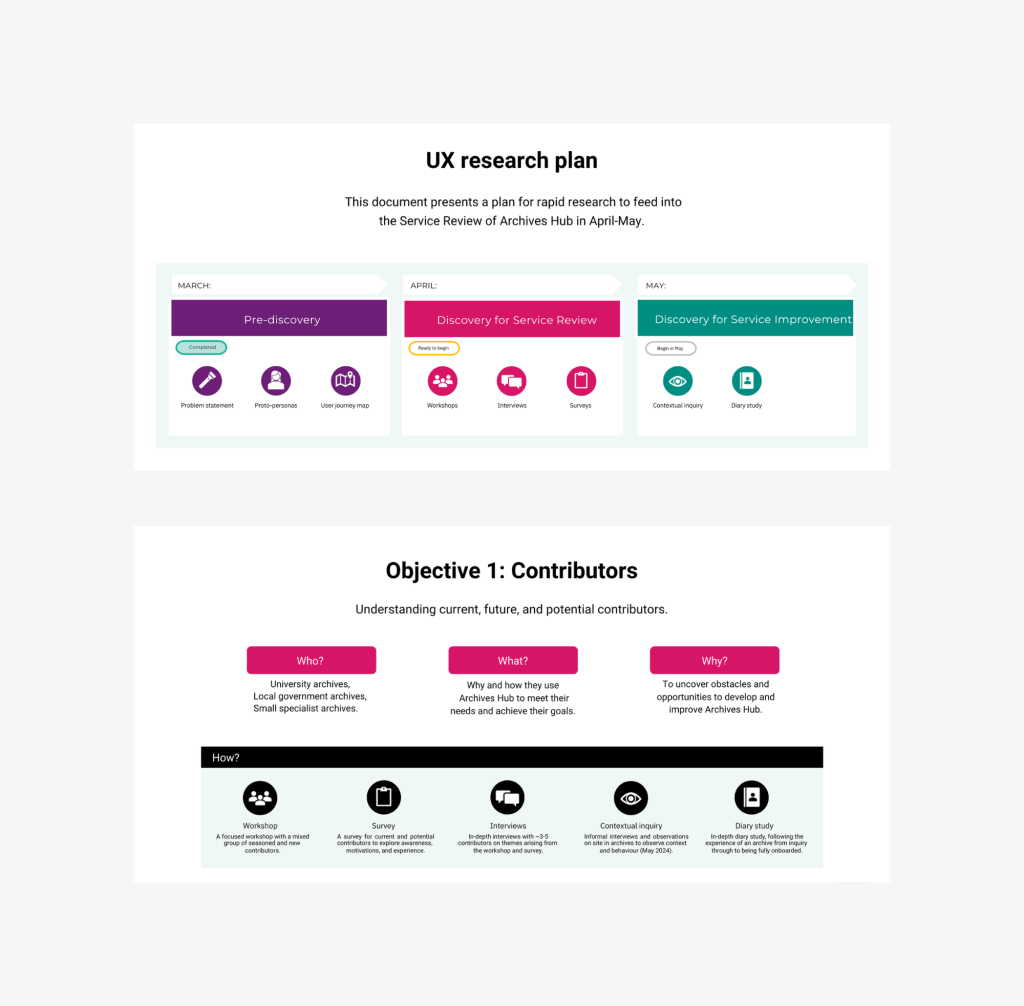
Research plan
Creating a research plan for phase two: user research for discovery, including interviews, contextual inquiry, workshops, and surveys. This phase of working is currently in progress.
 ELENA GORMAN, PHD